Friday, November 22, 2013

Remembering C.S. Lewis and Aldous Huxley on the 50th Anniversary of their Death.


50th Anniversary--

Remembering Lewis and Huxley

by Gary L. Gregg

22-November-2013


For the last week our televisions and newspapers have been taken up with commemorations of the 50th anniversary of the assassination of President John F. Kennedy.  As I write this, we are just an hour away from bells tolling across the land. It is right that we pause and remember the event that changed so many lives and in ways we won't ever fully unravel, changed a generation of Americans and altered the cultural landscape of our nation.

Two other giants of the 20th century also died on November 22, 1963 and deserve our remembrances and appreciations. Perhaps the most important Christian apologist of the 20th century, C.S. Lewis died in his beloved Oxford the same day one of the most prophetic writers of the century, Aldous Huxley passed away in a bed in Los Angeles. The death of both men was overshadowed by Kennedy's assassination and have been for the last fifty years.  Still, these writers had a profound and lasting influence on minds and imaginations around the world and, at least in the case of Lewis, it might well be that his influence over the last fifty years  has been more wide and profound than was that legacy cut short in Dallas.

Nearly all of Lewis' books are still available in print and in just the last couple of years at least two new volumes have been salvaged from his records and made available to the public. His life has been the subject of a major motion picture. His children's books continue to baptize the imaginations of our young and have been made into movies that have reached even more. His Christian apologetics have converted atheists, like he once was himself, and instructed anew millions raised in the church. His scholarship stands the test of time. His adult fiction, particularly his novel That Hideous Strength has never been more timely. His The Abolition of Man remains a powerful tonic to the moral relativism of the modern world.

Later today Clives Staples Lewis joins the likes of some of the greatest literary artists in the English speaking world including Chaucer, Browning, Blake, Dickens, Austin, and Kipling, with a special memorial in Poets Corner, Westminster Abbey. The honor is more than well-deserved.

Aldous Huxley's literary influence has not remained nearly as influential as has Lewis' but his _Brave New World_ remains one of the greatest warnings against the trends of the modern world. From genetic engineering to drugs for sexual enhancement, few writers were as prescient about the way our culture would decline into decadence over the last seventy years. His imaginary world built on the elimination of pain and the maximization of mindless contentment deserves reading and re-reading in our age of electronic distraction, declining education standards, and sexual mores as loose as the novelist could ever have imagined.

As we commemorate our fallen political figure today, let's also remember the literary giants who warned us, prepared us, and continue to inspire and instruct those who still read books in our own Brave New World full, as it is, of hideous strengths.

Friday, November 15, 2013

 Chickamauga

A Ghostly Tale of the Civil War

By Gary L. Gregg

I wrote this little tale on Halloween night 2013.

For the full story, please visit: Chickamauga


horse-war-jpg
Fog covered the camp as he arose the next morning.  It was early and the late night sentries were exchanging their positions with fresh eyes as he crossed the dewy grass.  “I have never been so glad to see dawn,” one of them said to another, “it was like I could feel ten thousand dead standing up and walking the grounds about that bloody creek.” The boy from Ohio rolled his eyes and kept walking toward the edge of the camp.  He pulled a small mirror from his pocket to check his hair, vanity knowing no end, even in the terrible war of brothers.  He squinted as his eyes seemed less bold and clear, almost grey, in fact.  He looked up at the fog and determined it was just the defuse morning light.

Hands in his pocket, the soldier looked into the dense fog, playing games trying to make out the objects cutting the peculiar shapes.  One was moving and moving fast.  It grew in size and speed at it approached.  A man.  No, a horse. It was a proud and mighty black steed that burst from the oblivion beyond. No rider drove it on, but it bore an empty saddle upon its back, cavalry stirrups dangling at the edge of its belly.  The beast pulled up short in front of the Union soldier.

“Move on, plug. Be your man living or dead, an officer’s mount is no good for me in camp!” As he slapped the horse’s rump, he noticed the saddle had the initials CSA burned into the leather. “Ah, a Rebel horse! Well, who killed your traitor-owner?”

Fueled again with an energy he only knew when he was looking down on someone else, the boy who volunteered each time a chicken needed slaughtered, threw himself up into the saddle.  He felt the power of the horse beneath him and took the reigns into his hands. He would ride it over to his superior officer’s tent and offer it as tribute.  Perhaps he would be rewarded.  It did appear to be a very fine horse.

http://www.theimaginativeconservative.org/wp-content/uploads/2013/11/hood-at-chickamauga.pngHe dug the heels of his worn and nearly ruined boots into the horse’s flanks.  As he did, he felt his hands tighten around the reins. Pressure built in his legs as they pressed against the ribs beneath. He pulled his right leg and then his left but neither moved. Pressure like arms enveloped his chest and squeezed. The private squirmed but could not move.  He called for help but no one reacted. He didn’t know if they could not hear or the pressure around his chest kept him from emitting the sounds he intended.

The horse reared back and turned.  Out of the camp in Chattanooga it ran.  Into the deep fog. The helpless rider was flung left and right as the horse lurched around trees and jumped brambles and boulders. Onto the fields where sergeants lay next to privates in the equalizing embrace of death, the horse carried its prisoner. Bodies, once full with laughter, now lay in unnatural contortions, their life-giving blood staining the grass and already sunk into the soil below.

The boy thought he could see all the existence of these bodies in all their forms, one after another and almost all at once; Life, agonizing death, deep fear, resignation, the bleaching of death, gaseous explosions before the final stages of decay made the renewing magic of new soil. Movement. The movement of the bodies. Death was to be still, here it was all movement, all change. Fear gripped his soul and squeezed in the same way his body was being held to the horse.

Pulling up to a rising Confederate casualty, the horse bucked. The pressure released. The boy from Ohio felt himself falling toward the killing fields.


Monday, July 8, 2013

Leadership and the Moral Imagination, a snippit.

 Here is a snippet from my talk tonight on leadership and the moral imagination to students of the Intercollegiate Studies Institute.

# # #
 
The phrase "moral imagination" is from that great 18th century British parliamentarian Edmund Burke in his  Reflections on the Revolution in France.  Attacking the French Revolution, he wrote the following difficult but very insightful paragraph:

       "All the decent drapery of life is to be rudely torn off.  All the superadded ideas, furnished from the wardrobe of a moral imagination, which the heart owns, and the understanding ratifies, as necessary to cover the defects of our naked shivering nature, and to raise it to dignity in our own estimation, are to be exploded as a ridiculous, absurd, and antiquated fashion."

*****


Now . . .
furnished from the wardrobe of a moral imagination. . .  What on earth does that mean?  I read Russell Kirks essays on the topic.  I read and reread Burkes language.

Maybe I am not as smart as most, but I know I wrestled with this concept on and off for a decade or more before it finally started to make sense to me.  It was like one of those lizards you grab at and think you caught and then it scampers out of your fingers and you are left with just the decoupled tail.

I dont have time this morning to give you a full treatment of the topic of imagination or that particular variant called the MORAL IMAGINATION.  I dont have time this morning to explore all the intricacies of the argument or what I have learned about it all in the last decade.  Instead, I want to offer a few thoughts to set up a couple of the ways I have come to think of the power and importance of IMAGINATION and particularly of what I think is the essential link between imagination and LEADERSHIP.

My own eureka moment came when reading Robert Penn Warrens Pulitzer prize winning novel All the Kings Men, a book I highly recommend to you. It is mandatory reading for my leadership students. There is a scene in that book that rocked me back on my heels.  To boil it down, the scene had one man (Jack) changing another mans mind (Dr. Stanton) and convincing him to do what Jack wanted him to do.  (That is, jack was exercising leadership).  When asked how he did it, Jack said that he changed the pictures in Dr. Stantons head.
You see, he didnt give him a better argument.  He didnt threaten or bribe him.  Those tactics wouldnt work with a man of such integrity as Dr. Stanton and he knew it.  He changed the pictures in the Dr.s head and that was sufficient.
This insight, that we might be driven in our actions, not so much by cold, calculating reason but by the pictures in our head, forms an essential foundation of what I want to talk to you about today.
I have become convinced, we are all governed by the pictures in your heads.  We are sad or happy, successful or a failure, well-adjusted or an outcast, Christian or pagan largely because of the pictures we carry around in our heads.  They are essential to who we are. 
We all carry pictures around with us from all sorts of places: parents, teachers, loved ones, movies, music, classmates, church, books. 
       If you are a conservative, you probably carry around with you certain pictures of things you want to conserve and find true and others you find false and maybe even dangerous.  More on that as the week progresses.
So, back to my more general point; these pictures, in other words, are what inhabit our imagination.
It is those pictures that govern our lives.  It is our imaginations that rule our world.
We cant get any further than the pictures in our heads allow us to go.  We cant do anything that the pictures in our heads tell us we cant. 
And so you might now start to see the genius of Dr. Kirks friend who claimed we could reform our politics by infusing poets into the process as advisors to our leaders. 
Our political figures are governed in their actions no less by the pictures in their heads and the quality of their imaginations, than are we.
It was a twisted and diabolic imagination that made possible Nazi Rule.
It was the idyllic imagination that made possible the terrors of the French Revolution and the excesses of 20th century communism.
Think of the differences in public policy decisions made by a political leader who had visions of America as one huge secular empire.  And another whose vision of America at its best is that of a republic of small republics who worship as communities and raise families according to shared values. What divergent decisions those two would make!


Thursday, July 4, 2013

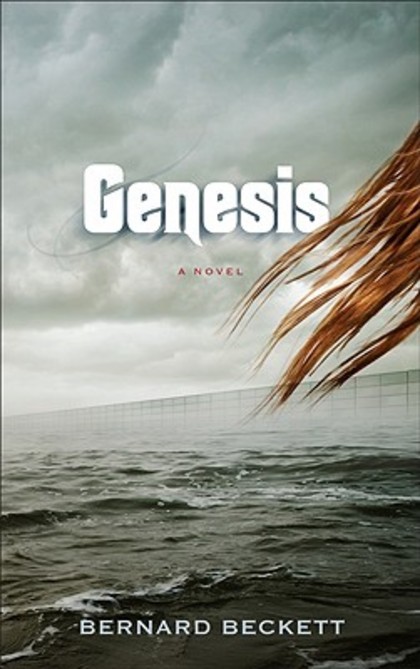
Genesis--The Power of Ideas

 A Review of Genesis by Bernard Beckett
 
By Gary Gregg, PhD
McConnell Center Director

What does it mean to be human? In one way or another almost every great piece of literature–from Homer's Odyssey to Shakespeare's Hamlet to Tolkien's Lord of the Rings–asks this basic question. Few authors are as overt in their raising this question than is Bernard Beckett in his 2006 novel Genesis (Mariner Books).
I recently picked up this slim volume because a friend suggested it as a modern companion to Plato's Republic.  Though what I found in the pages was not at all what I had expected from the description given, I did find a good read that raises profound questions for our age of the machine and the growing science of genetics. And, the final twists of the plot were worth every moment.
The book takes place in a post-apocalyptic age. A plague has decimated the population of the planet except for a small island-nation led by a man who calls himself Plato. Plato builds a sea wall to protect his people from the carriers of the plague and then proceeds to build a society remarkably like the Republic that sprang from the imagination of the great Greek thinker 2,500 years ago. The Republic's motto is "Forward toward the past" and its version of conservatism manifests itself in the platonic vision that change means decay. The classes of society are divided into philosophers, soldiers, technicians and laborers. 
The key moment in the downfall of the Republic comes with the discovery that the laboring class would be the key source of instability. To deal with this situation, the leaders reason, they must do away with labor so no human being finds themselves at the bottom.  To that end, they build labor- saving machines and continue in their experiments to perfect their machines by making them capable of artificial intelligence.
But if a machine can be developed with artificial intelligence–with the ability to learn, mimic, change and evolve as it interacts with its environment (like human babies interacting with their parents), what sets it apart from being considered a human being? This, perhaps, is the key question of the novel and unfolds as a series of interactions between a robot dressed as an orangutan and a human rebel whose crime was to save an innocent girl adrift on the sea by killing one a fellow soldier who, under orders, was about to kill her.
Beckett wrote the novel while he was on a science fellowship exploring DNA mutations and one can see the application he was making of applying our understanding of DNA to that basic question of what makes us human.
What does make us human? Is it being self-conscious? Being able to imagine and create? Being created in the image of God? Suffering from Original Sin? Having a soul? A certain particular pattern in our DNA? Amidst all we can do with machines, is there something that is ultimately non-transferable from our species? 
In 1948, Richard M. Weaver published a book called Ideas Have Consequences. In that important book, Weaver showed the origins of modernity and also gave us a very handy phrase with which to understand the power of ideas. In Genesis, Beckett gives us a short novel whose basic thrust is to imaginatively demonstrate his conception of the incredible power of ideas. Ideas, one of his characters argues, are all that hold us together. They bind person to person into communities. But, what is more, rather than understanding ideas to be the creations of individual human beings, he creates a picture of ideas as being outside forces which invade and colonize individual minds. They are like microbes transmitted from host to new brain, occasionally mutating in order to survive in their new environment.  
What if being human, Beckett seems to want us to ask, is just to have been colonized by a certain set of particular ideas? What if those ideas are best expressed, perhaps, in the first book of the Bible which Beckett takes for his own title? What if, then, those ideas can jump from organic intelligence to colonize artificial intelligence, too? Or, what if those ideas, like all living things, can die away in a culture that neglects them or actively assaults them?
Genesis is a slim volume and worth the time, thought and reaction it might provoke. In our age no less than any other and perhaps more, we must continue to seek wisdom about what it means to be human.

Gary L. Gregg II is the author or editor of ten books including his young adult novels The Sporran and The Iona Conspiracy.

Russell Kirk's Founders and the Unwritten Constitution


 RUSSELL KIRK'S FOUNDERS AND THE UNWRITTEN CONSTITUTION

BY

GARY L. GREGG

2013 is the 60th anniversary of the publication of one of the most consequential books of the 20th century.  I am privileged to have been asked to contribute to a number of forums this year discussing Kirk and his work and am particularly thankful to Liberty Fund and Richard Reinsch for inviting me to contribute to this one.  As I considered what I would write and thumbed through The Conservative Mind, I hit upon some things I had never spent time thinking about and my essay represents one strand of that new thought on Kirk's ideas.

I hope you enjoy this section of my essay and will read the full version at the website listed at the bottom.

The Conservative Mind at 60: Russell Kirk’s Unwritten Constitutionalism
A consideration of Kirk’s founders, both missing and rediscovered, lead us to an understanding of Kirk’s conservatism that would surprise many who consider themselves contemporary heirs of the movement he helped found.  Kirk is concerned with institutions, including those of the U.S. Constitution, to the degree that they are aligned with two more critical under girding phenomena: human nature and political culture.

Throughout The Conservative Mind, authors and statesmen are upheld to the degree that their understanding of human nature is in accordance with the inherited vision of Judeo-Christian revelation and human experience.  Human beings are flawed, incapable of perfection, and suffer profoundly from original sin.  To the degree that political institutions are structured to account for this overriding fact and meliorate its most negative consequences, they are found to be worthy of praise.  Here the United States’ Constitution is good as it rests on just this basic understanding and accounts for the corruption of power by separated and checked institutions.

Though John Adams fought hard against the philosophes and their abstract accounts of human nature untethered to imperfectability, he admitted some degree of change possible within the human species.  Such change is manifest in the political culture.  As the virtues, values and ideas of a people change so will their political prospects, making any constitution only as useful or as pernicious as the culture that underpins it.  Of course, with Adams and all of Kirk’s conservative minds, any change is bounded by the fact that we are created somewhere between the beasts and the angels and are destined to always stay in that zone of humanity.

To understand and learn from Russell Kirk’s magnum opus, then, we must understand an overriding fact of human existence: sin and culture trump politics and planning. This is why Kirk, unlike so many contemporary conservatives, point us in the direction of the poets and not the politicians; the unwritten more than to the written constitution.  It is in this way that we might more properly consider our “founders,” not the framers of the Constitution in 1787 but those who shaped the minds and imaginations of the culture that produced it.  The Constitution of 1787 will survive as something more than parchment only to the degree that it is supported by the prevailing political culture of America.

FOR THE FULL ESSAY VISIT: http://www.libertylawsite.org/liberty-forum/russell-kirks-founders-and-the-unwritten-constitution/

Saturday, June 15, 2013

Little League as Culture Tonic


Little League Baseball as Culture Tonic

By Gary L. Gregg II

(Thanks to www.theimaginativeconservative.org for allowing me to re post this piece I published first there overnight).

Nolan's Knuckler
Tonight one of the most important episodes in the life of the Gregg family came to an end.  With Nolan (12) throwing a newly developed knuckle ball toward home plate, thirteen years of Little League came to an end for us.  The emotions and memories flooded over us as his mother and I sat on one of the bleachers where we spent so many countless hours watching our four children play the sport we all loved.  Those cold March nights and those broiling hot summer days are behind us and I miss them already.

Baseball was formative in my experiences and for the last thirteen years I have seen it help form countless boys and girls into young men and women.  Sport itself teaches incredibly valuable lessons but baseball is different.  Baseball is republican; baseball is deliberate; baseball is particularly American.

Baseball teaches the value of merit while giving almost everyone a chance.  The most gifted athlete can share the baseball diamond with the most under-coordinated weakling; the tallest giant can share the field with the tiniest squirt. Last year Nolan, one of the smallest guys in the league played second base next to his team’s first baseman who weighed as much as I do and was nearly as tall. Nearly everyone can play baseball, which is less true of violent sports like football where aggression and size count so much or the soccer field that demands too much for so many asthmatic lungs. Everyone is given a chance and might make a play--and yet merit triumphs in the batting order, in play time, and in All-Star picks.  As much as giving everyone a trophy in t-ball has become a standard joke about our culture of indulgence, playing baseball through Little League teaches the value of meritocracy and the need for excellence.

Landon in one of his All Star bids for a State title
Though it teaches competitiveness and can fuel a youngster’s drive in many fields later in life, it is also a team sport that demonstrates the importance of community.  Except for the rare pitcher who can strike out an entire line-up, no single player can win a baseball game.  Unlike individual sports like tennis or cycling, only communities win. 

Little League also helps build communities as people who otherwise wouldn't know each other end up cheering, laughing, and crying with each other on the bleachers.  My family lives outside of Louisville, Kentucky in a community where almost everyone leaves home in the morning and heads to Louisville to work and then back to their subdivision homes where they might barely speak to their neighbors.  But at the baseball park, communities come together.  Catholic and protestant, Republican and Democrat, factory worker and professor sit side by side as essential equals and to one degree or another share in community through their boys on the field.

Good coaches build character.  But bad coaches also build character.  We have all seen the horror stories of overly competitive parents and coaches.  I have witnessed a few of them myself.  But I have also witnessed some of the most important mentoring I have ever seen of older men to the next generation of human beings.  My most important memory as a coach came after one particularly difficult loss.  My kids were not the most talented and they had to battle their tales off against the best team in the league.  It was the most intense game I think I ever experienced and we lost it on the last pitch.  On that team was an overweight kid of meager talent but a lot of heart who after the game came up to me and said, "Coach, I wanted to cry but then I thought 'would coach want me to cry?' and I didn't!"  I'm not saying I was a model coach, but that is a memory of touching another soul that I cherish and know they happen every day of summer at Little League parks across the land. 

Jacob in his last year of LL. He just graduated from high school.
Bad coaches can also teach character. Life is not fair. Bad people will be encountered throughout life.  Much better that our young people experience it in their formative years than be blindsided by the unfair and unrealistic boss or spouse later in life.  And, I have seen coaches make profound transformations through their time in Little League.  I have seen the guy we all would rightly call an SOB develop into a more caring, open, and nurturing adult leader. Sometimes it’s the coaches and the parents who are in need of having our hearts tuned by the game.

One of the aspects of baseball I value most, however, is the slowness of its pace. To some degree Little League has succumbed to our culture by time-limiting games (Baseball should NEVER be a timed sport. Unlike Soccer, football, hockey and basketball, time should never run out and hope should never be taken away in baseball.)  But otherwise, it retains the slow, deliberate and republican pace of life.  Our kids fed on video games, the flashing images of TV, and the now ubiquitous text message are forced to slow down on the baseball diamond.  Kids sometimes have to stand quietly through numerous innings waiting for their chance to prove themselves.  Where the fast pace of soccer feeds the destructive speed of our culture and aids in the warping of our children’s thirst for constant action and hyperactivity, baseball helps remind us that true progress is slow, that life is not about being entertained all the time, and that sometimes we have to wait patiently for our turn or to achieve our goals.

Emma, after winning state titles, moves on to high school
The number of African-Americans in the major leagues or among college baseball teams has plummeted in recent decades.  Many are puzzled by this development and numerous hypotheses have been put forward to explain it: from the lack of fathers to play catch with to the thought that baseball is too slow for the basketball and soccer and video game generation.  Whatever the cause, in the communities and with the kids that need the lessons of baseball the most, Little League programs are the weakest.  This is probably not just coincidental. I think the original "compassionate conservative" understood this when he built a t-ball field on the White House lawn a dozen years ago.

image_name2As I end this little reflection on thirteen years of watching life unfold on the Little League field, I must give a special commendation to our own particular Little League.  Under the leadership of Brad Clifford and all the volunteers who give countless hours, North Oldham Little League  in LaGrange, Kentucky is a model of what Alexis de Tocqueville would understand as our local institutions upon which character, families, and a thriving nation are built.  Thank you all for helping us raise the Gregg children and for all you have done to make our community and our nation a better place to live.

May Little League baseball endure as long as the Republic it supports.

Gary L. Gregg II is author or editor of ten books including his young adult novels The Sporran and The Iona Conspiracy.

Thursday, May 23, 2013

The Dalai, the Dinosaur, and the Tao

 The Dalai, The Dinosaur, and the Tao


Here are the last two paragraphs from a short essay I wrote after having the chance to listen to the Dalai Lama in Louisville, Kentucky on May 21, 2013. 


"At the root of the Dalai Lama’s understanding of the good life is a profoundly illiberal understanding of humanity. Where the modern liberal project is based on the Lockean and Hobbesian lie that everything rests on the autonomous individual, the Tibetan gave us a vision of humanity existing in families and in community with one another. He told the story of how his illiterate mother carried him on her back while she toiled in the fields and how he learned compassion through a deep and nearly constant communion with her.  A good life within the Tao sometimes requires us to carry others and sometimes to be carried as we attempt to make our way on this journey. We are never really autonomous and self-sustaining individuals. The very office of the Dalai Lama teaches just such an understanding as Buddhist believe he is the reincarnation of a soul who reached its journey but turned back to commune with those still suffering and striving.

"Perhaps we should not be surprised that the teachings of the Dalai Lama are so fully within “the way” that C. S. Lewis identified.  What is surprising is how much the undergirding vision of the man and his teachings are misunderstood by the post-moderns who admire him for lessons they don’t quite understand.  For the sake of the Tao itself, let us hope this 14th incarnation of the Dalai Lama is not the last of his kind. For now, we Christians of the west should join in his teachings as we are all, despite our differences, either within the Tao or in the shadow lands beyond."


Thanks to the Drepung Gomang Institute and the Kentucky Center for the Performing Arts for hosting the Dalai Lama and (Traci Simonsen) for inviting me to tag along.

The full essay can be found by going to:

http://www.theimaginativeconservative.org/the-dalai-the-tao-cs-lewis/#.UZ4WgIJ1Fyg